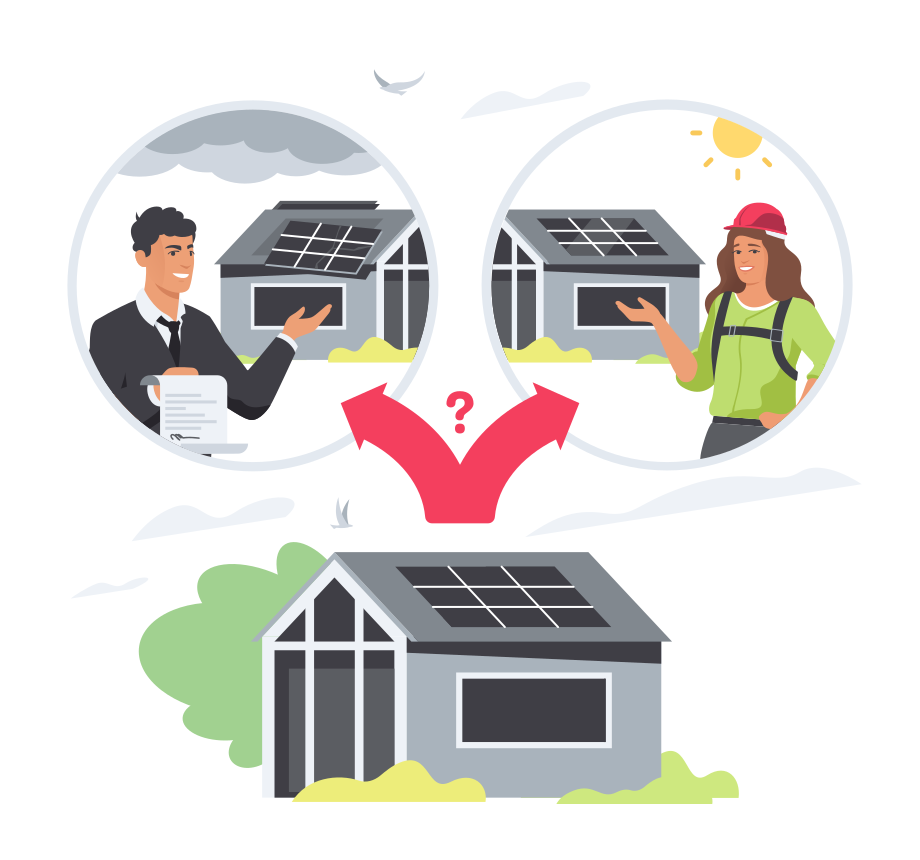
Worauf sollten Hausbesitzer achten, wenn sie Solar installieren? (Ein Leitfaden aus Sicht eines erfahrenen Installateurs)

Wenn du seit zehn Jahren oder länger in der Solarbranche bist, merkst du meist (innerhalb von Minuten), ob ein Unternehmen weiß, was es tut, oder ob es nur schnell Verträge abschließt und dann abtaucht.
Du weißt, wie hochwertige Installationen aussehen.
Du kennst den Unterschied zwischen einem vertikal integrierten Installationsbetrieb und einer „reinen Sales“-Firma, die alles auslagert. Du hast gesehen, was schlechtes Design anrichtet, wie Zahlen schön gerechnet werden und was passiert, wenn am Ende kein echtes Service-Team hinter der Arbeit steht.
Aber das Ding ist: Hausbesitzer wissen davon nichts.
Was passiert also, wenn dich ein Freund von irgendwoher fragt: „Hey, ich überlege mir eine PV-Anlage. Worauf soll ich achten?“
Klar, du hast dir schon Gedanken gemacht. Aber hast du es mal aufgeschrieben?
Dieser Beitrag ist unser Versuch, genau das zu tun. Sieh ihn als freundliche Checkliste von einem Solar-Veteranen zum nächsten, aber geschrieben für den Hausbesitzer, der einfach eine kluge Entscheidung treffen will.
Und ehrlich: Das ist wichtig. Sehr.
Denn wenn wir die Branche wirklich voranbringen wollen, müssen wir weg von „Solar verkaufen“ und hin zu echter Beratung. Begleiten statt drücken. So schaffen wir Vertrauen, erhöhen die Akzeptanz und verhindern, dass schwarze Schafe der Solarbranche einen schlechten Ruf verpassen.
Los geht’s mit der Checkliste:
1. Nimm einen vertikal integrierten Installationsbetrieb (alles inhouse).
Wenn wir ein Thema bis zum Umfallen betont haben, dann dieses.
Wenn ein Unternehmen seine Anlagen nicht selbst montiert und für alles Subunternehmer nutzt, kaufst du nicht beim Unternehmen. Du kaufst bei einer Sales-Organisation. Und wenn Probleme auftauchen (tun sie immer), landest du im Telefon-Pingpong. Vertikal integrierte Betriebe verantworten alles, vom Vor-Ort-Termin bis zur finalen Abnahme. Das heißt: klare Verantwortung, bessere Qualität und meistens auch eine bessere Erfahrung.
2. Prüfe das Modullayout: liegen Module außerhalb der Dachfläche oder auf Hindernissen?
Du wärst überrascht, wie viele Angebote Module zeigen, die in der Luft schweben oder Schornsteine halb überdecken.
Wenn das Design „zu perfekt“ aussieht, ist es das wahrscheinlich auch. Ein seriöser Anbieter plant mit deiner echten Dachform und allen Hindernissen, nicht nur, um irgendeine Traum-Produktion auf dem Papier zu erreichen.
3. Lass keine Strompreis-Steigerung von über 5% ansetzen.
Solar-ROI-Rechner spielen damit gerne. Klar, Strompreise sind gestiegen. Aber 6 bis 8% pro Jahr anzunehmen, nur damit die Ersparnis besser aussieht? Das ist ein Warnsignal.
5% sind realistischer. Alles darüber ist Augenwischerei.
4. Bestehe auf eine Verschattungsanalyse.
Dein Dach ist einzigartig.
Bäume, Entlüftungen, Nachbargebäude. All das beeinflusst den Ertrag.
Ein seriöses Angebot enthält eine Verschattungsanalyse und idealerweise eine Solar-„Heat Map“ deines Dachs. Wenn dein Installateur nicht erklären kann, woher die Ertragszahlen kommen, oder wenn er mehr als 1.500 kWh/kW installiert verspricht, frag nach Nachweisen oder geh.
5. Frag nach dem Service: Wer repariert es, wenn was kaputtgeht?
Wechselrichter fallen aus. Verbindungen lösen sich. WLAN fällt aus. Das ist normal. Aber was ist der Plan, wenn etwas kaputtgeht? Wenn du keine klare Antwort bekommst oder wenn sie sagen „keine Sorge, das passiert nie“, dann lauf.
Ein echter Installationsbetrieb hat ein eigenes Service- und Wartungsteam und erklärt dir genau, was passiert, wenn deine Anlage Hilfe braucht.
6. Hol dir ein Angebot für Kauf und für Finanzierung.
Zu viele Anbieter zeigen nur den Finanzierungspreis. Der verschleiert die echten Kosten. Wie beim Autokauf stecken in Solarfinanzierungen oft versteckte Gebühren und Aufschläge.
Wenn du bar zahlen kannst, ist das über die Zeit meist die günstigste Option. Wenn du lieber monatlich zahlst, ist das auch okay. Wichtig ist nur: Leg beides nebeneinander und vergleiche.
Und wenn der Zinssatz zu gut klingt, um wahr zu sein, lies das Kleingedruckte.
7. Check die Komponenten: Tier-1-Module und mindestens 10 Jahre Wechselrichter-Garantie.
Funktioniert Solar auch mit einem selbstgebauten Modul und einem No-Name-Wechselrichter? Klar.
Heißt das, dass du das machen solltest? Nein.
Nimm gute Komponenten mit solider Garantie und verlässlicher Herstellerqualität, damit du weißt, dass das Ganze auch langfristig hält.
8. Frag, wie viele Anlagen sie installiert haben, und verlange eine Referenz aus deiner Region.
Du willst nicht das Versuchskaninchen sein.
Du willst nicht Teil der Lernkurve von jemandem sein.
Such dir Anbieter, die mindestens 500 Installationen vorweisen können.
Noch besser, wenn sie einen unabhängigen Net Promoter Score (NPS) zeigen können, idealerweise über 50. Und frag immer nach einer Referenz aus deiner Gegend. Wenn sie in der Nähe wirklich gute Arbeit gemacht haben, gibt es zufriedene Kunden, die das bestätigen.
9. Montagegarantie: nicht zu kurz, nicht zu lang.
Die meisten guten Betriebe geben mindestens eine 10-jährige Montagegarantie. Das ist fair, schließlich geht es um ein kleines Kraftwerk auf deinem Dach. Wenn du aber 25 oder 30 Jahre Montagegarantie siehst, sei skeptisch.
So lange gibt es viele Solarfirmen noch gar nicht. Was ist dann die echte Garantie?
10. Achte auf NABCEP-Zertifizierungen.
Wenn dein Anbieter NABCEP PV Installation Professional oder NABCEP Technical Sales Zertifikate hat, ist das ein sehr gutes Zeichen. Dafür braucht es echte Arbeit. Jahre Praxis, Schulungen und Prüfungen. Das zeigt: Du arbeitest mit einem Profi, nicht mit jemandem, der letzten Monat erst angefangen hat, PV zu verkaufen.
Fazit
Am Ende geht es beim Kauf einer PV-Anlage nicht nur darum, deine Stromrechnung zu senken. Es ist eine Investition in dein Zuhause für 25+ Jahre. Nimm dir Zeit. Stell Fragen. Mach deine Hausaufgaben. Und hab keine Scheu, Anbieter abzulehnen, die dir keine klaren Antworten geben.
Wenn wir als Branche Hausbesitzern helfen, bessere Entscheidungen zu treffen, gewinnen wir alle. Der Ruf von Solar wird besser, die Verbreitung steigt, und weniger Menschen fallen auf dubiose Verkaufsmethoden rein.
Solar ist nicht nur ein Produkt.
Es ist ein Versprechen. Sorgen wir dafür, dass wir es auch so behandeln.
Hast du Fragen? Lass uns sprechen!
Von "Aha" bis "Oh Mist" - wir teilen alles über unsere Reise, um 100.000 Solarsysteme für Haushalte pro Jahr zu installieren.
Wir lernen eine Menge und du wirst es auch.
Solarsysteme für Privathaushalte, die im vergangenen Jahr durch Sunvoy installiert wurden:
Echtzeit-Metriken, verfolgt vonsunvoy
Bevor Hervé Sunvoy gegründet hat, war er Mitgründer und Geschäftsführer eines führenden Solarbetriebs für Privathaushalte in Washington DC mit über 60 Mitarbeitenden und mehr als 12 Mio. € Jahresumsatz. Heute unterstützt er die am schnellsten wachsenden Solarteure dabei, ihre Abläufe mit Sunvoy zu optimieren.